Showing posts with label scaffolding material on hire. Show all posts

Saturday, 29 April 2017

6 Health & Safety Risks in Construction

Today, the construction industry is witnessing fatality rate more than double that of the average all sectors. Minor accidents are also more.
Simply put, construction sites are a health and safety nightmare. In this way, almost every possible hazard exists within this constantly changing working environment.
But the hazards associated with construction sites are eminent. In order to avoid such hazards, you need to use good quality scaffolding materials.
These scaffolding provide support to the workers on construction sites. In order to get good quality scaffolds, you need to contact a reputed supplier who offers services like scaffolding material on hire.    
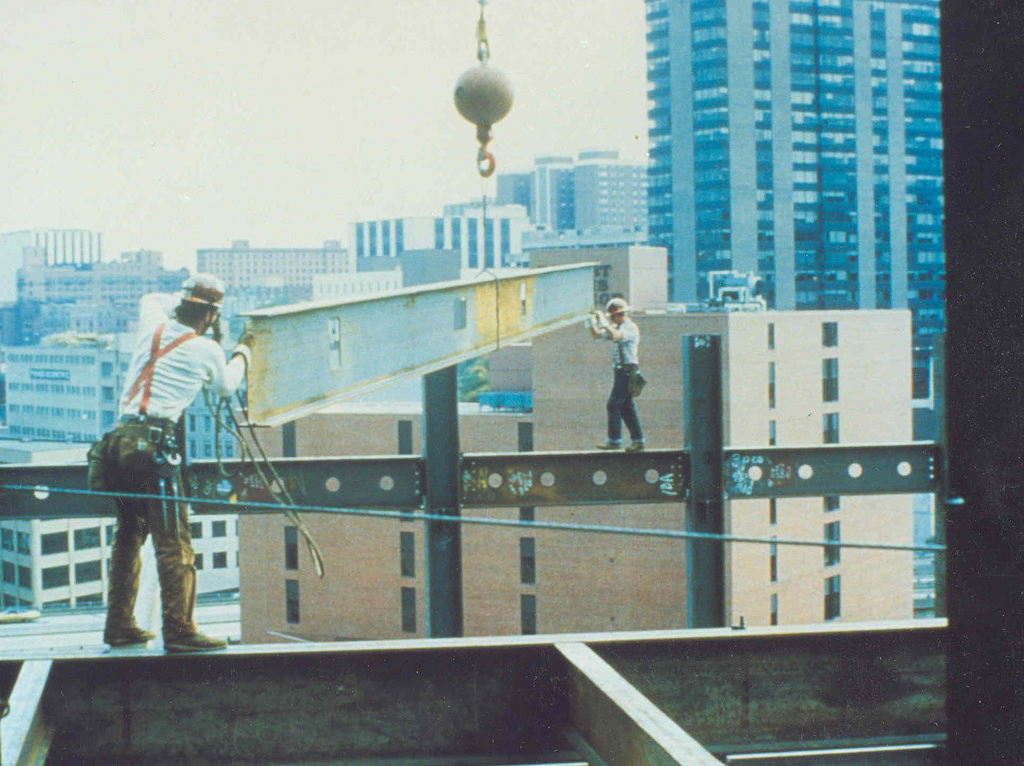

A few of the main hazards are listed below – 
1.      Working at Height:
The construction of building or demolition works frequently needs tradesmen to work at height.
Each year fatalities and injuries involving height relating factors account for many accidents.
The risks associated with working at heights are often increased by added access and mobility restrictions.

2.      Moving Objects:
A construction site is an ever changing environment and hazards are very common in this industry. As things rise and expand, hazards only increase as a construction project progress.
Construction sites become dangerous with constantly moving vehicles.

3.      Slips, Trips, & Falls:
It seems hardly surprising when you consider a wide range of activities going on at a construction site. Slips, trips, and falls may happen on an almost daily basis.
In construction sites, one can witness holes in the ground, buildings at various stages of completion, scaffolding, stored materials and equipment.
You really do need to keep eyes in the back of your head.

4.      Noise:
Noise is a major hazard within the construction industry. Repetitive, excessive noise causes long term hearing problems.
It can be a dangerous distraction and can cause major accidents as well.

5.      Electricity:
During refurbishment work on commercial and domestic buildings, three construction industry workers are injured each year.
Those people who are working near overhead power lines and cables are also at risk.

6.      Collapse:
Every year large buildings collapse and seriously injure people working in them. Henceforth, before the work starts precautions need to be planned.
The risk of an unintentional collapse is generally more associated with demolition works or when a partially completed building or scaffolding collapses.
However each year it still accounts for a percentage of fatalities.

Conclusion:
Falls are the top cause of death on construction sites. Other common causes of death on construction sites include:
·         Being caught in an object or between two objects
·         Electrocution
·         Being struck by an object
So one needs to be very careful when working on heights and you have to take extra precautions as well.  

About Author:
Baba Jagta Shuttering supply the shuttering and scaffolding material for the construction of mega projects like housing societies, IT buildings, malls, multiplexes, factories at very competitive rates.
We provide major services like scaffolding on hire. We provide Cuplock System, Prop, Span, Channel, U-Jack or Base-Jack etc on HIRE.


Monday, 27 March 2017

Top 5 Scaffolding Safety Essentials Tips Worth Considering in 2017

Working on scaffolding can pose a serious danger especially if basic safety measures aren’t put in practice. In this regard observing scaffolding safety essentials can help a great deal.
According to a report released by Delloite in 2015 scaffolding have caused an average of three hundred and five deaths in the construction industry.
Construction Review Online interviewed experts on how to work better from heights. The following scaffolding safety essentials tips are worth considering:


1.      Avoid last minute rush:
While the pace at which construction work gets finished is often important for projects and budgets, it will influence careless and costly mistakes.
You can invest in tools and techniques which allow greater efficiency so that safety is not compromised to get the project done on time.

2.      Keep your workplace organized:
Avoid slip, trip and fall hazards by keeping the construction worksite organized. When working with scaffolding, keeping tools organized can reduce the risk of tools falling from scaffolding. It can also make moving around on the scaffolding safer for workers.

3.      Identify Hazards:
This must be done before work starts and while work is being done. You can identify potential hazards and solutions prior to the start of work.
While working near power lines make sure that scaffolding are far away to prevent risks of electrocution.

4.      Proper training:
As with all aspects of a construction jobsite, make sure that your workers are trained and up to date with OSHA requirements.
Training in the setup and construction of scaffolding will make sure that a solid work space for overhead workers guarantees a rig that won’t unintentionally collapse from instability.

5.      Review the site:
Besides identifying hazards, you can continue to review the worksite all through the construction project to recognize any new hazards that can arise during construction.
Keeping an eye out for possible hazards will help eliminate them from happening. Workers will become more comfortable as work continues.

Necessary Elements of Safe Scaffold Construction:
Two out of three construction workers execute some part of their job on scaffolding. Among the many types of scaffolding, the most common is the fabricated modular frame.
It’s easy to assemble and provides height adjustments depending on the task at hand.
While most scaffold-related accidents occur as a result of human factors, a percentage is caused due to indecent scaffold construction.

Below are necessary guidelines in the proper construction of scaffolding:
1. Platforms
Platforms on scaffolding should:
·         be completely planked without gaps measuring more than one inch
·         Be fully planked between front upright and guardrail support.
·         support weight four times its maximum load
·         be made up of scaffold grade wood
·         at least eighteen inches wide
·         Overlap at least twelve inches over its supports, unless restrained.

2. Height:
The height of the scaffold shouldn’t be more than four times its minimum base dimension unless ties, or braces, guys are used.

3. Ends:
Each end of a platform, unless cleared or otherwise restrained by hooks, should extend over its support by at least six inches.

4. Support:
·         Platforms supported by outrigger beams, brackets, poles, uprights legs,  posts, & frames
·         legs, posts, frames, scaffold poles, and uprights must be on base plates and mud sills or other firm foundation
·         Restrain from tipping by guys, ties, or braces

Seven Safety Essentials for Working with Scaffolding:
Those who work on scaffolds face some workplace risks that can be minimized if the proper precautions are taken. Care should be taken throughout the construction operation.
 The following are seven important precautions that can be taken to ensure that a construction site stays safe and secure while scaffolding is being used:

1.       Proper training:
Workers should get training about safety features and practices that go along with the use of scaffolding equipment.
They should develop an understanding regarding the design and the functioning of scaffolding equipment to avoid hazards.

2.       Understanding load capacities:
When it comes to scaffold, a careful understanding of load capacity is very important. It is important to factor in ALL loads putting stress on the scaffold.

3.       Adequately securing scaffolds:
When a scaffold is used, it should be braced or tied to a secure structure.

4.       Using guardrails
Guardrails are important safety features on scaffolds. There must be a guardrail along the top, middle, and bottom of the scaffold.
When materials are hoisted guardrails should be temporarily removed. They should be immediately replaced.

5.       Keeping things organized:
Scaffold platforms generally do not offer a lot of space. Keeping them well ordered and free of obstruction is of utmost importance for worker’s safety.

6.       Preparing properly:
Preparatory work is an important aspect of scaffold use. Preparatory work must ensure that the scaffold base is sound and secure.
Also, ground conditions should be examined to prevent hazards and to keep obstruction away.

7.       Keeping up on maintenance:
Maintenance tasks are important for keeping a scaffold safe. Scaffolds should be regularly inspected for damaged parts that need to be replaced.

8.       Keeping things level:
Scaffolds should be completely levelled before they’re mounted by workers. It is probably a good idea to re-verify that a scaffold is level all through the day.

About Author:
Baba Jagta Shuttering is a well reputed scaffolding manufacturer & supplier in Gurgaon. We offer best scaffolding material on hire services.

We provide our customers with best services every time. Your requirements are our main concern. We’re highly pleased and delighted to serve you with our idyllic services.

Wednesday, 28 December 2016

10 Construction Safety Tips that you need to know

Construction safety tips are for every individual who walks through a site that includes you, despite your role in the project.
While skilled workers go through extensive training on the best practices for the equipment they use; superintendents, visitors, and other tradesmen should know basic safety measures.
Apart from this, if you are in search of a reputed supplier who can offer you good quality scaffolds, then you can contact them accordingly and can avail their products and services.
A well established scaffolding material supplier will offer you services that are very genuine and cost effective. They provide services               i.e. scaffolding material on hire.

Top 10 Construction Safety Tips are mentioned as follows:

1.      Use the proper tool for the designated task:
Frequent use of inadequate or poorly designed equipment may eventually lead to health hazards (tendonitis, trigger finger, white finger, and carpal tunnel syndrome).
Never carry/yank a tool by its cord or hose. Also make sure to keep these cords or hoses far from sharp edges, oil, heat, and water.
Protect your ears and eyes from intense noises and vibrations. You can choose power tools with longer trigger tools, lower vibrations, and muffled noises.

2.      Scaffolding should be erected on a solid surface, and must itself be solid, rigid, and have a high weight capacity:
Never support scaffolds or planks on uneven surfaces with portable or unsteady objects.
Stay at least ten feet away from power lines. A qualified supervisor will manage the erecting and dismantling of the scaffold. Never overload a scaffold.
3.      You should inspect a ladder or stairs before stepping upon it:
Avoid stepping on anything that is loose, worn, weak, or otherwise defected or damaged. Choose aerial lifts or elevated platforms, which are safer options than balancing on a ladder.
You can install guardrails with control line systems, toeboards, and warning lines. Do not use metal ladders on windy or stormy days.

4.      Never enter an unprotected or unsupported trench:
At least one person remains outside the trench at all times to warn of changing soil conditions or any other determined hazards.
Safe exits with ladders, staircases, or ramps should be positioned regularly along the trench. Obstacles should never block the exit.
A support system should always be used for excavations beneath the footing of a foundation or a wall, or any excavations deeper than twenty feet.

5.      Be especially careful while boarding and descending from heavy equipment:
Especially observe the placement of your hands and feet, to make sure that they do not get caught or you do not slip.
Never balance or keep yourself in place by a toe-hold or finger-hold grip. You can safely engage your entire foot or hand in the process. Do not carry objects while climbing.

6.      Preventing a chemical disaster:
In the scenario of a chemical spill within the workplace, first consider the situation and determine if it is a low- or high-hazard spill.
Report it immediately if it is high-hazard. Only allow qualified professionals to deal with the situation. It is safest to believe that all spills are high-hazard.
Do your best to keep others away and prevent the spill from spreading.

7.      Always wear appropriate clothing and shoes respective to your job:
Wear safety harnesses if you are working from an elevated location and there is the risk of falling. Wear a breathing mask at all times, especially if:
·         You deal with dangerous or toxic chemicals or fumes.
·         Your workspace has poor ventilation.
·         Your workspace has flying particles, debris, or dust.
·         Always wear protective equipment which is intended and recommended for your particular task.

8.      Ensure your electrical tools are used with a G.F.C.I. grounded power supply:
It is essential for all electric power tools. It is especially important while working outdoors or in wet conditions.
You can equip temporary lights with non-conductive guards. Always remember to unplug unused appliances.

9.      Keep your wrists and arms in neutral so that you can stay away from severe symptoms of carpal tunnel syndrome:
Choose a small and handy tool belt that you can easily keep balanced with small adjustments. Sit (instead of squatting or kneeling) while working at lower levels, to avoid straining your lower body.
You can use your knees instead of your back. In this way, you can avoid twisting your body while picking, carrying, or releasing a heavy load.
Only work on surfaces which are sturdy, clean, and dry. If you need to cross a slippery surface, take small steps, and put your whole foot down and toes pointed outwards.

10.  Safety is a team effort:
Educate everyone in the workplace regarding the safety requirements and consider posting a list of workplace safety tips.
Workplace safety training will help them to reduce or eliminate injuries and illnesses occurring in the workplace.
You have to keep the communication lines open with your employers, employees and co-workers. It is done in order to promote and maintain a safe environment.

Conclusion:
1.       Always follow the correct procedures.
2.       Be alert to hazards that could affect anyone
3.       Lift slowly and smoothly.
4.       Use machinery only if you are trained, alert and authorized.
5.       Come up with a fire emergency plan
6.       Always wear appropriate clothing and shoes

About Author:
Baba Jagta Shuttering is a well renowned supplier and manufacturer of scaffolds. We offer services i.e. scaffolding material on hire. Our services are highly reliable and genuine.
We put our heart and soul to provide our customers the best service every time. Your requirements are our main concern. We are highly pleased and delighted to serve you with our ideal services.


Wednesday, 16 November 2016

Top 10 Safety Hazards in Construction that you need to know

Hazards which are associated with the construction sites are very common.  
Most responsible employers are aware of this fact and they take care of their employees, visitors, and those who may be affected by their activities.
They will manage the site effectively and implement appropriate accident prevention measures. Risk assessment is carried out by management to identify hazards and risks posed.
If you want to avoid any sort of risk during construction, then you must use best quality scaffold materials.
In this scenario, the best scaffold material suppliers and manufacturers can offer you items which are really cost effective and genuine. They also offer services i.e. scaffolding material on hire.


Below mentioned are some hazards which are encountered on typical construction sites: -
1.       Working at Height:
The construction of buildings or indeed demolition works frequently requires tradesmen to work at height.
The risk associated with working at a height is often increased by added access and mobility restrictions.
Training, including safety awareness training is important for employees required to work at height.

2.       Moving Objects:
A construction site is an ever changing environment. Hazards are natural and only increase when the construction project progress.

3.       Slips, Trips, & Falls:
When a varied range of activity is going on at a construction site, then there is a possibility that surprising slips, trips, and falls may happen on an almost daily basis.

4.       Noise:
Within the construction industry, noise is a major hazard. Repetitive and excessive noise will lead to long term hearing problems. It can be a dangerous distraction and is the major cause of accident.

Simply using ear plugs do not necessarily provide total protection against hearing damage. Employers should carry out and document a comprehensive noise risk assessment and issue appropriate PPE.

5.       Hand Arm Vibration Syndrome:
Hand arm vibration syndrome, or ‘blue finger’ is a painful and devastating industrial disease of joints, nerves, and the blood vessels.
It is triggered by the prolonged use of vibratory power tools and ground working equipment.
This industrial disease is frequently observed in ex-construction workers who have worked for years with little or no protection, using inappropriate and poorly maintained equipment.

6.       Material & Manual Handling:
Materials and equipments are being constantly lifted and moved around on a construction site both manually or by using lifting equipment.
If employee’s duty involves manual handling, then adequate training needs to be carried out.
If lifting equipment is used, then adequate training should be carried out. It may involve some form of test in order to confirm competency. Records of training should be maintained for verification.

7.       Collapse:
The risk of an unintended collapse is generally more associated with demolition works.
When a partially completed building or scaffolding collapses, it accounts for a percentage of fatalities each year.  So precaution needs to be planned before the work starts.

8.       Asbestos:
In a country, several public buildings may contain harmful asbestos materials. They are often forgotten, hidden away, and by and large harmless in its undisturbed state.
A worker needs to know where it is and what to do if they encounter suspicious materials which might contain asbestos.

9.       Airborne Fibres & Materials can cause Respiratory Diseases:
In construction sites, people may witness a large amount of dust which is often invisible. It may contain toxic mixture of hazardous materials and fibres.
These toxic materials can damage your lungs and can give rise to diseases like chronic obstructive asthma and silicosis.

10.   Electricity:
During refurbishment work on commercial or domestic buildings, many workers were electrocuted each year.
People working near overhead power lines and cables are also at risk. There are a growing number of electrocutions involving workers who are not qualified electricians.
However they are carrying out electrical work. We support our clients to manage their exposure to risk.
They should obey the latest rules and regulations to improve business performance and encourage workforce engagement.

Today, Baba Jagta Shuttering is considered as the reputed scaffolding supplier and manufacturer in Delhi/ NCR and Gurgaon.
We offer services like affordable scaffolding on hire.  The product offered by us is widely accepted in all types of construction projects. We deal with some of the most reputed construction firms and builders.
The main objective of the company is to provide high level of customer satisfaction by offering superior grade products at minimum price.
We are offering quality products to our customer. In addition, the scaffolds are easily accessible in customized designs as per the varied requirements of clients.
Its features:
·         Sturdy
·         Extensively used
·         Quality tested
The Construction Scaffolding is quality tested by our professionals on diverse parameters. We provide these services on timely basis and in market leading pricings.
Our offered scaffolding material is generally accepted by our clients. Other than this, our valuable clients can get this rental service from us at the most reasonable price.


Friday, 7 October 2016

Top 5 risk assessment when working at height- Focus on the basics

A vast majority of construction projects today comprise of working at heights in some capacity or another. Therefore, it becomes very important to provide proper training to your employees.
Understanding the basic safety requirements for working at heights will avoid accidents. It also helps you to plan your projects more efficiently.
No two projects are completely similar. So, before undertaking any job, a thorough risk assessment must be done.


Working on scaffolds is always safer and easier. You can use scaffolds during working at heights.
In order to get fine quality scaffolds, one can contact any reputed supplier. A reputed scaffold supplier can offer you best scaffolding rental services.
The risk assessment procedure consists of the following steps:
1.       To analyse the hazards associated with falls:
·         To recognize the place of working i.e. platforms, roofs, ladders etc.
·         One can select the correct set of tools to prevent the fall from this particular structure.

2.       To identify the hazards caused to individuals:
·         To consider individuals who will exactly perform the job.
·         One can assemble the working team members on the basis of their experience and individual skill set and can reduce the risk factor.

3.       Identifying the additional dangers:
·         To understand whether some parts of the structure is unstable or not.
·         Is there any difficulty using scaffolding or ladders?  
·         To analyse the measures to increase or decrease the risks of working at heights.
·         You have to inspect the structure in detail and ensure that you plan for every eventuality.
·         Not to forget that it is not only the building itself which must be taken into account, but the surrounding area and weather as well?

4.       Recording your findings.
·         Records are very essential. It ensures that you don’t miss out anything.
·         They can be used in case of any legal proceedings.

5.       Reviewing assessments:

·         Many projects which involve this type of work are long-term.
·         Henceforth, after every major change, the risk needs to be re-assessed.
·         In this way, you are able to update your anti-hazard measures accordingly.

Baba Jagta Shuttering is an outstanding scaffold material supplier in Delhi and NCR region. They provide services like excellent scaffolding material on hire.
We strive to offer high quality scaffold materials. Owing to its distinctive features, the scaffolds can be widely used in distinct industrial and commercial areas.
Furthermore, as per the varied requirements of clients, the scaffolds are easily accessible in modified designs.  


Tuesday, 4 October 2016

Scaffold Safety fundamentals - Top 5 Rules You Need to Know

Working on a scaffold is the safest way to carry out jobs at height and it requires a specialized approach to ensure the safety of everyone involved.

Basic security protocols can reduce the risk of accidents to a greater extent. So, it becomes very important for every person to work with this type of system directly or indirectly.

Furthermore, if you are interested in hiring a best scaffold material supplier then you can directly go to their website and can contact them.

You can avail best and affordable scaffolding  rental services.


The most basic safety rules that need to be followed while working on scaffolds are as follows:

1.       Only trained professionals are allowed to work on a scaffold:
·         An inexperienced person is not at all allowed to work on these structures.
·         The workers need to know how they can move on a platform and use different tools while on it.
·         Any scaffold training must involve a specialized course in fall protection as well as erection and dismantling of the structure.           

2.       Prepare the ground in advance:
·         A correct preparation will minimise the risk of the scaffold destabilisation and accidents.
·         One can examine the ground carefully and ensure its level and sound.
·         Any kind of obstruction needs to be removed.
·         This is done in order to ensure that these obstructions don’t turn into a hazard.
·         Kindly note that overhead wire also needs to be removed.

3.       Try to keep everything legal:
·         To carry out this kind of job, a person working on a scaffold needs to be properly licensed or certified.
·         The tools utilized during this process must be selected carefully and any rules and regulation pertaining to your regional work and health safety departments should be obeyed very well.

4.       Calculate and respect load capacity:
·         A scaffold has a very limited load capacity which one should know, before the first person climbs onto it.
·         Make sure that the weight of the workers and the weight of their equipment and materials don’t exceed this capacity at any point.

5.       Secure the scaffold correctly:
·         Scaffolds are generally fixed to the building.
·         You can select the best technique for every particular case.
·         Don’t hesitate to take extra steps to secure the structures more thoroughly.
·         When it comes to perform certain risky jobs, It is always better to be safe than sorry.


Baba Jagta Shuttering is a leading supplier of scaffolds. We offer services which are very genuine and effective. Our services include affordable scaffolding material on hire.

We are supplying our products to all over India for sale and rental. We are providing quality products to our clients and have well experience in the same industry.

The scaffolds can be utilised in different industrial and commercial areas. As per the varied requirement of the clients, these items can be easily accessible in customized designs.