Saturday, 29 April 2017

6 Health & Safety Risks in Construction

Today, the construction industry is witnessing fatality rate more than double that of the average all sectors. Minor accidents are also more.
Simply put, construction sites are a health and safety nightmare. In this way, almost every possible hazard exists within this constantly changing working environment.
But the hazards associated with construction sites are eminent. In order to avoid such hazards, you need to use good quality scaffolding materials.
These scaffolding provide support to the workers on construction sites. In order to get good quality scaffolds, you need to contact a reputed supplier who offers services like scaffolding material on hire.    
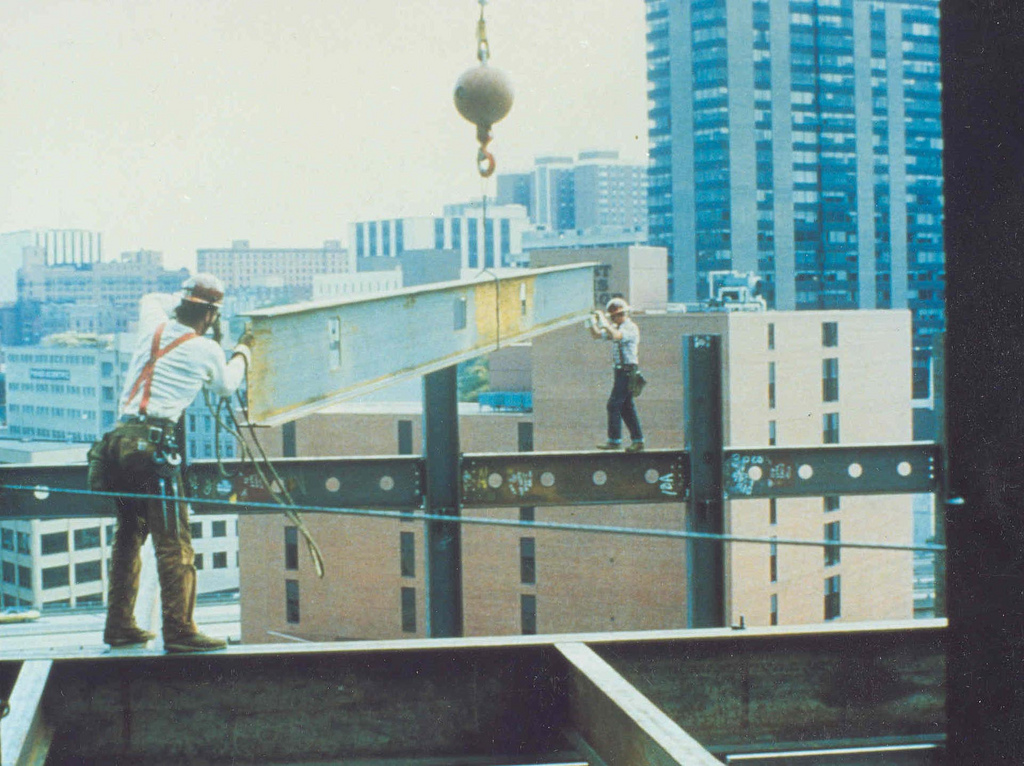

A few of the main hazards are listed below – 
1.      Working at Height:
The construction of building or demolition works frequently needs tradesmen to work at height.
Each year fatalities and injuries involving height relating factors account for many accidents.
The risks associated with working at heights are often increased by added access and mobility restrictions.

2.      Moving Objects:
A construction site is an ever changing environment and hazards are very common in this industry. As things rise and expand, hazards only increase as a construction project progress.
Construction sites become dangerous with constantly moving vehicles.

3.      Slips, Trips, & Falls:
It seems hardly surprising when you consider a wide range of activities going on at a construction site. Slips, trips, and falls may happen on an almost daily basis.
In construction sites, one can witness holes in the ground, buildings at various stages of completion, scaffolding, stored materials and equipment.
You really do need to keep eyes in the back of your head.

4.      Noise:
Noise is a major hazard within the construction industry. Repetitive, excessive noise causes long term hearing problems.
It can be a dangerous distraction and can cause major accidents as well.

5.      Electricity:
During refurbishment work on commercial and domestic buildings, three construction industry workers are injured each year.
Those people who are working near overhead power lines and cables are also at risk.

6.      Collapse:
Every year large buildings collapse and seriously injure people working in them. Henceforth, before the work starts precautions need to be planned.
The risk of an unintentional collapse is generally more associated with demolition works or when a partially completed building or scaffolding collapses.
However each year it still accounts for a percentage of fatalities.

Conclusion:
Falls are the top cause of death on construction sites. Other common causes of death on construction sites include:
·         Being caught in an object or between two objects
·         Electrocution
·         Being struck by an object
So one needs to be very careful when working on heights and you have to take extra precautions as well.  

About Author:
Baba Jagta Shuttering supply the shuttering and scaffolding material for the construction of mega projects like housing societies, IT buildings, malls, multiplexes, factories at very competitive rates.
We provide major services like scaffolding on hire. We provide Cuplock System, Prop, Span, Channel, U-Jack or Base-Jack etc on HIRE.


Saturday, 15 April 2017

Precaution to be Taken During Building Constructions

Construction work is somehow dangerous. However, if someone takes appropriate precaution, then they can avoid many dangerous accidents.
While working in hazardous conditions, workers also need to keep in mind a lot of precautions themselves. Proper use of safe scaffolding materials can be of great help.
Also, the construction owners do need to take care of the safety and security of their workers.


Now look at the safety measures that every construction worker need to take:

1.      Double-Check Your Work Areas:
Scaffolds are an essential part of most construction sites and are also associated with a high number of injuries. While working on them, you should take care of your safety first.
The scaffold must be inspected properly by a professional or a competent person. Never work on an incomplete scaffold that doesn’t have a strong base or platform.
Ladders are other essential construction site tools. You have to check the ladder thoroughly before using it. If you find any part of the ladder unstable, then don’t use it.
A ladder should be of proper strength. All the slabs of the ladder should be secured properly. You need to properly secure the upper and lower end of the ladder.

2.      Be careful with Electricity and Equipment:
Construction sites need a lot of electrical installations. Lifting equipment mostly involves electricity and weights. You need to follow the safety precautions listed for the equipment.
If you don’t know them, you can seek help and instructions from a site supervisor or co-worker who has worked with the equipment before.
If you’re using plugged-in portable devices, like grinders or drills, you need to check that the cables are protected, and the power supply is provided with an earth leakage circuit breaker.
Do not allow the electrical tools to come in contact with water. Also don’t stand or work immediately below a heavy suspended load.
You need proper training before operating some equipment. Any error can cause a major accident on the site.

3.      Maintain Fencing and Prevent Fires:
Notice the number of fatal injuries and falls that happen in areas where there’s no fencing.
Dangerous areas with broken and damaged fencing should be avoided until they’re completely repaired or a proper fencing is in place.
Be alert and take some measures to avoid them. Open flames need to be kept away from construction sites because of the presence of flammable materials.

4.      Protective Apparel and PPE:
 Factory and construction site owners are supposed to provide their workers with proper protective gear and clothing.

Well-fitted helmets and protective eyewear are a must. While dealing with toxic chemicals, you need to wear ear plugs, muffs and protective gloves.

Anti-slip footwear and protective apparel are essential for those working in toxic or dusty environments.

Fall harnesses are very essential for every construction worker. When you’re working at heights make sure that your harness is strong.

At sites where there’s a lot of movement of heavy vehicles, workers need to wear highly visible clothing so that they can be located and seen easily.

5.      You need to keep First Aid Close:
The site supervisor and contractor should make sure that first aid is always accessible to the workers as it is not possible for workers to carry first aid supplies with them all the time.  
Basic first aid for cuts, minor burns, and falls should be always available on site. So you can provide required medical assistance to the workers immediately.
This is beneficial to the employer, as well, as this makes sure that after resting for some time, the worker will return to his work.
Some injuries when treated immediately help in limiting the damage immensely and prevent infections from spreading.

Conclusion:
A construction worker should be careful all the times. During an emergency always follow instructions.
If you notice any hazardous situation, such as a floor opening that’s open or not fenced, then immediately inform your co-workers and supervisor.

About Author:
We’ve marked our name in the list of top-notch organizations by providing best scaffolding rental services.
Scaffoldings are widely used in industrial, commercial and residential construction projects. With well experience in the same industry we’re supplying quality products to our clients.


Tuesday, 4 April 2017

How to be a Safety Leader in the Workplace - A quick look

Workplace safety isn’t just important as of legal and liability reasons, however having healthy and happy workers should be a topmost priority for any employer.


Now check out some ways to be a great safety leader in your workplace.

1.      Push Sick Time Usage:
It may sound crazy to encourage workers’ using their sick time; however many times employees come to work with serious health conditions.
This puts everyone in the office at risk. From a health viewpoint, it’s better to allow these employees to stay home and take the day off, or let them to work from home.

2.      Daily Cleaning and Maintenance:
One of the leading causes of work-related injuries is slips and falls.
You should be a daily monitor for any shared spaces in the workplace to ensure that unsafe obstacles are cleaned up or removed in a timely manner.
The likelihood of an accident is reduced to a greater extent by keeping the place clean and ordered.

3.      Securing Your Workplace:
Another good way is to limit unauthorized individuals from entering your workplace. While working, giving a safe and secure entry to work would give you and your employee’s a better peace of mind.

4.      Prepare for Emergencies:
Believe it or not, before they reach the hospital about ninety percent of cardiac arrest victims die on their way to the hospital.
Having emergency equipment in the office, i.e. a defibrillator helps save a person’s life.

5.      Get Informed:
It’s your employer’s responsibility to make sure that you’re informed of & have access to all relevant safety standards for your industry.
Don’t make assumptions that you’re being told everything that you need to know.

6.      Stay Equipped: Keep your safety equipment in good order and up to date.

7.      Be an Agent of Culture Change:
The wrong attitude about safety is infectious. You can use your influence to highlight the importance of safety & everyone going home safe and happy at the end of the day.

8.      Set an Example: the first principal of any leadership role is to practice what you preach.

9.      Be Your Brother’s Keeper:
If you see someone who’s going to do something foolish, speak a word to them. They can harass you about it, but you will be glad at the end of the day for watching out for your co-worker.

10.  Safety Training and Drills:
Be a leader by training and promoting all employees. It should be done so that they can manage life-saving techniques.
By the time it takes for emergency personnel to reach your business, a life could be saved by you or one of your own employees if they’re properly trained.
You must take your time as a leader to train employees on evacuation and emergency procedures as well.
In addition, you can make sure that you and all employees know the Occupation Health and Safety Act (OSHA) so that you remain agreeable with the guidelines.
This would keep employees safe and thereby reduce liability in the office.

Conclusion:
Today, workplace health and safety departments have evolved into something else entirely.
Safety planning has become a must-have activity for corporation to defend organizations and their employees.

About Author:
Baba Jagta Shuttering is a well known supplier and manufacturer of high quality scaffolds. We offer affordable services like scaffolding on rent.
We believe in offering safe, high quality scaffold. It can be customised according to the specific demands of the customers.
Our high quality scaffolds give optimum flexibility in desired scaffolding operations. Our scaffolds are used in both commercial and residential projects.


Monday, 27 March 2017

Top 5 Scaffolding Safety Essentials Tips Worth Considering in 2017

Working on scaffolding can pose a serious danger especially if basic safety measures aren’t put in practice. In this regard observing scaffolding safety essentials can help a great deal.
According to a report released by Delloite in 2015 scaffolding have caused an average of three hundred and five deaths in the construction industry.
Construction Review Online interviewed experts on how to work better from heights. The following scaffolding safety essentials tips are worth considering:


1.      Avoid last minute rush:
While the pace at which construction work gets finished is often important for projects and budgets, it will influence careless and costly mistakes.
You can invest in tools and techniques which allow greater efficiency so that safety is not compromised to get the project done on time.

2.      Keep your workplace organized:
Avoid slip, trip and fall hazards by keeping the construction worksite organized. When working with scaffolding, keeping tools organized can reduce the risk of tools falling from scaffolding. It can also make moving around on the scaffolding safer for workers.

3.      Identify Hazards:
This must be done before work starts and while work is being done. You can identify potential hazards and solutions prior to the start of work.
While working near power lines make sure that scaffolding are far away to prevent risks of electrocution.

4.      Proper training:
As with all aspects of a construction jobsite, make sure that your workers are trained and up to date with OSHA requirements.
Training in the setup and construction of scaffolding will make sure that a solid work space for overhead workers guarantees a rig that won’t unintentionally collapse from instability.

5.      Review the site:
Besides identifying hazards, you can continue to review the worksite all through the construction project to recognize any new hazards that can arise during construction.
Keeping an eye out for possible hazards will help eliminate them from happening. Workers will become more comfortable as work continues.

Necessary Elements of Safe Scaffold Construction:
Two out of three construction workers execute some part of their job on scaffolding. Among the many types of scaffolding, the most common is the fabricated modular frame.
It’s easy to assemble and provides height adjustments depending on the task at hand.
While most scaffold-related accidents occur as a result of human factors, a percentage is caused due to indecent scaffold construction.

Below are necessary guidelines in the proper construction of scaffolding:
1. Platforms
Platforms on scaffolding should:
·         be completely planked without gaps measuring more than one inch
·         Be fully planked between front upright and guardrail support.
·         support weight four times its maximum load
·         be made up of scaffold grade wood
·         at least eighteen inches wide
·         Overlap at least twelve inches over its supports, unless restrained.

2. Height:
The height of the scaffold shouldn’t be more than four times its minimum base dimension unless ties, or braces, guys are used.

3. Ends:
Each end of a platform, unless cleared or otherwise restrained by hooks, should extend over its support by at least six inches.

4. Support:
·         Platforms supported by outrigger beams, brackets, poles, uprights legs,  posts, & frames
·         legs, posts, frames, scaffold poles, and uprights must be on base plates and mud sills or other firm foundation
·         Restrain from tipping by guys, ties, or braces

Seven Safety Essentials for Working with Scaffolding:
Those who work on scaffolds face some workplace risks that can be minimized if the proper precautions are taken. Care should be taken throughout the construction operation.
 The following are seven important precautions that can be taken to ensure that a construction site stays safe and secure while scaffolding is being used:

1.       Proper training:
Workers should get training about safety features and practices that go along with the use of scaffolding equipment.
They should develop an understanding regarding the design and the functioning of scaffolding equipment to avoid hazards.

2.       Understanding load capacities:
When it comes to scaffold, a careful understanding of load capacity is very important. It is important to factor in ALL loads putting stress on the scaffold.

3.       Adequately securing scaffolds:
When a scaffold is used, it should be braced or tied to a secure structure.

4.       Using guardrails
Guardrails are important safety features on scaffolds. There must be a guardrail along the top, middle, and bottom of the scaffold.
When materials are hoisted guardrails should be temporarily removed. They should be immediately replaced.

5.       Keeping things organized:
Scaffold platforms generally do not offer a lot of space. Keeping them well ordered and free of obstruction is of utmost importance for worker’s safety.

6.       Preparing properly:
Preparatory work is an important aspect of scaffold use. Preparatory work must ensure that the scaffold base is sound and secure.
Also, ground conditions should be examined to prevent hazards and to keep obstruction away.

7.       Keeping up on maintenance:
Maintenance tasks are important for keeping a scaffold safe. Scaffolds should be regularly inspected for damaged parts that need to be replaced.

8.       Keeping things level:
Scaffolds should be completely levelled before they’re mounted by workers. It is probably a good idea to re-verify that a scaffold is level all through the day.

About Author:
Baba Jagta Shuttering is a well reputed scaffolding manufacturer & supplier in Gurgaon. We offer best scaffolding material on hire services.

We provide our customers with best services every time. Your requirements are our main concern. We’re highly pleased and delighted to serve you with our idyllic services.

Thursday, 23 March 2017

Top 10 Tips to Create a Safe Construction Site

Simply you’ve to change the mindset of your workers and you can manage to change the safety of your work site.
You have to provide a safe working environment so that everyone’s perception would be a safe one.
The following tips would help you change the look and feel of your construction site. In this way, everyone’s impression is –“This is a safe place to work”.
Also it is to be kept in mind that during any construction work, you need to have some good quality materials and tools like scaffolds.
A good quality scaffold will give proper support during any construction activity. You may get scaffolds from some reputed manufacturers and suppliers.
Most reputed scaffolding rental services will offer you materials that are highly very affordable and valuable.


Now check out the Top 10 Tips for creating a Safe Construction Site
1.      Communication
You’ve to set up proper communication plans and techniques to alert everyone regarding the potential hazards and safety procedures.
You can make a single page Safety Outline sheet which explains the rules of your site and who’s in charge of the site.
While visiting your site it needs everyone to check in with someone so that they can be briefed on any current safety issues before entering the site.

2.      Planning and Organization
A safe project begins long before the first shovel hits the dirt. Proper planning of the project site and work areas will help keep the site safe and neat.
You can create a project logistics plan which outlines the organization of your construction site.

3.      Training
Nothing can take the place of offering adequate training to your workers.
You can’t wait for someone to go out to a site and work safely if you’ve not educated them on what safe work looks like.
There’re thousands of resources available that can offer proper training to its workers. Many suppliers and vendors provide training free of charge.

4.      Proper Personal Protective Equipment:
When workers have the proper safety equipment, then they’re safe and they can keep safety on their mind.
Make it a requirement that all visitors, workers, and managers on your site keep the required safety equipment.

5.      Change the Question:
Too often, the question that workers ask themselves is, Can I do this without getting hurt?
If you change questions, then workers will constantly take chances and thereby allowing others around them to take chances as well.
To make your site safer, get your workers to ask a different question like would I let my daughter to do that?
When people look at things from a different point of view they can even make better choices.

6.      Morning Meetings:
This is one of my favourite tools to manage a safe construction site. Because it helps you keep the workers safe and it also helps you run a more productive work site.
Each morning, assemble all the workers for a quick briefing.
During the briefing, you can draw people’s attention towards critical safety concerns on the site, what is planned for the day, and what everyone is thinking about.

7.      Posters and Signage:
Be sure that you post signs to alert every one regarding the hazards of job site. Make sure your workers have the proper signs and barricades needed to keep your site safe and people informed.
Basic warning signs would help. However you can step this up by giving even more signage and posters that speak to people. It would help keep safety on the mindset of your workers.

8.      Checklists:
Checklist can help people take notice of their surroundings.  
You can use this technique to make checklists for your project sites that get your workers involved with checking the site for hazards.

9.      Cleanliness:
You have to keep your projects clean and organized. So, plan daily clean up and stick to the logistics plan that you have created for the project.

10.  Participation:
You can get everyone on your site involved in the safety of the site. You can also create a sense of teamwork in the safety effort.
There’re many ways to incite teamwork and cooperation among workers. The problem has typically been that the focus of these efforts has always been towards increasing production.
Production is important, however safety is equally important.

Conclusion:
Use these tips to supplement your current safety efforts and there’s no doubt you’ll see improvements to the safety on your projects.
In addition to make your projects safer, these efforts give another result. They show people you care about them.
The beneficial by-product of that is boosted morale. It is proven to boost productivity. In this way, by developing a safer mindset on your projects, you can start improving your bottom line.

About Author:
Baba Jagta Shuttering is a famous scaffolding material supplier in Delhi NCR and Gurgaon. We attract many highly reputed construction company and builders in India.

We put our heart and soul & provide our customers with best services every time. Your needs are our main concern. 

Wednesday, 15 March 2017

What Preventative Steps are Taken to Avoid Accidents at Work?

Undoubtedly, Construction is a dangerous work. There’re some ways to prevent accidents, though.
The 4 most common accidents in construction are:
·         falls/trips
·         caught in
·         struck by
·         electrocution


1.      Safety equipment:
All necessary safety equipment must be provided, in adequate quantities. It includes face protection, gloves, hard hats, goggles, safety shoes, Ear muffs and ear plugs.
The responsibility of an employer does not end at giving the safety equipment. It is important to make sure that all employees know how to use them properly.

2.      Safety instructions:
Complete instructions need to be provided, and employees need to be encouraged to know the procedures well.
Actually, employers offer incentives or rewards to employees who know and follow these procedures properly.
Communicating safety messages effectively, by using the latest best practices, is important to maintain a safe working environment and to minimize liability exposure.

3.      Timelines:
Sometimes a job needs to be done in a hurry. Even in these cases, employees need to be encouraged to not bypass safety procedures.

4.      Safety in transit:
Careful checks need to be conducted at regular intervals. Then necessary repairs need to be made as soon as possible.

5.      Extreme weather conditions:
If employees need to work in extreme heat or cold, they need to be advised to dress appropriately.
For example, in extreme cold, it becomes essential to properly cover the hands, face, head, and feet as these areas are most prone to frostbites.
In extreme heat, employees need to be encouraged to get plenty of fluids and stay hydrated. Also, adequate ventilation and airflow needs to be ensured.

6.      Safety signs:
Having all the necessary safety signs are an important preventative step.
They help temporary workers, subcontractors, & keep employees safe from harm by warning about these common construction hazards, like lockout or tagout, confined spaces etc.
The challenge is that most safety signs are outdated.

What’re the advantages & disadvantages of very tall buildings?
The main advantages of very tall buildings are:
·         They save space and accommodate more residents than shorter buildings.
·         The higher floors are relatively more airy and get more sunlight.
·         Taller buildings are a better option for the idea of a green building as they’re more airy, lit, and offer more surface area to install solar panels.
·         They’re much more inexpensive. Reason being, buying a small land and constructing a tall building is more affordable than purchasing an extensive land.

The major disadvantages are:
·         The construction of very tall buildings needs highly skilled engineers and architects to design the building. It thereby increases the total cost.
·         Apart from dead and live loads very tall buildings withstand wind forces and seismic forces.
·         Buildings above hundred story heights face the problem of oscillation, sometimes resulting in crashing of windowpanes.
·         The foundations of very tall buildings with smaller construction land are under tremendous load. Failing of soil may lead to collapse of the building.
·         Constant oscillations would give a nauseating feeling to the residents of the building.

Safety in the Workplace:
1.      Scaffolding for Fall Protection:
The scaffold shouldn’t be strong enough for it to be able to hold its weight. It must be strong enough to bear the load four times its weight.
Scaffolds should at least be ten feet from electric power lines at all times.

2.      Full Body Harness:
The full body harness is a means of personal fall protection which comes immediately to your rescue.
Workers wearing this personal protection equipment do not suffer from an injury because of the sudden force that the fall arrest system exerts on their body in case of a fall.
This force is distributed between the chest, pelvis, shoulders, and thighs.

3.      Ladders:
Another reason for injuries and fatalities resulting from falls is the improper use and placement of ladders at the construction place.
Although worker safety equipment like a full body harness would protect workers in case they fall off a ladder.
The proper use of this particular equipment will make sure that workers do not suffer from such falls.

4.   Eyes, Face Protection & Head Equipment:
One important but often ignored aspect of worker safety on construction sites is eye and face protection.
Workers on such sites, who’re cutting, grinding, nailing or welding, are constantly exposing their face and eyes to the dangers of flying objects.

5. Construction First Aid
You will never know when a fire or natural phenomenon would happen. There will always be fire risks. Also, it is important to have a fire distinguisher at hand.

About Author:
Baba Jagta Shuttering is a well renowned scaffolding manufacturer and supplier in India. We offer services like Shuttering and scaffolding on hire.
We put our heart and soul to provide our customers with best services every time. Your needs are our main concern.  We would be highly pleased and delighted to serve you with our perfect services.


Monday, 6 March 2017

6 Tips for Choosing a Scaffolder - A Quick Look

Scaffolding is an important aspect of any building project that involves working at height.
Choosing a scaffolder shouldn’t be a decision you take lightly. You need to ensure that your building contractors are safe.
But another important part of selecting a good scaffolding company is that you get value for your money.
A highly reputed scaffolding manufacturing company will offer you genuine services that are truly very reasonable and cost effective. Their services include scaffolding on rent.   


Take a look at valuable tips on how to pick a high-quality scaffolder.

1.       SAFETY:
Safety should be your number one priority when you’re choosing a scaffolding company.
There’re regulations surrounding the use of scaffolding. They exist especially when a building is odd in its design.
If scaffolding needs to be taller, longer or is built on rough ground, then the scaffolder needs to fill out a risk assessment. It should be well inspected.

2.      TYPE OF CONSTRUCTION:
If you are not sure about what kind of scaffolding construction you need, a reputable scaffolder would be able to advise you on what type of scaffolding you need.

3.       ASK THE SCAFFOLDER ABOUT THEIR TRAINING:
All trades people working on the scaffolding should’ve the qualifications to work at height. They should be able to give proof of this.
Any scaffolding company, which is registered with scaffolding trade bodies, must’ve all the appropriate training.
Do not allow a company to put up scaffolding if they can’t show you that they have the right training.
4.       ASK ABOUT INSURANCE:
It’s a legal requirement for UK companies with employees to have employer’s liability insurance.
Make sure that the company you choose has this, and check that they have public liability insurance too.

5.       ASK FOR REFERENCES:
Ensure that you learn about the scaffolder’s previous work. This can be in the form of asking for references from past customers.
Also, you can verify their online profile to see their ratings and reviews. Pick a scaffolder who has experience in the scaffolding construction company.

6.       CONSIDER YOUR BUDGET:
It is important to ensure that you do not get ripped off with scaffolding. You can get a range of quotes from different scaffolding companies to make sure that you get the best price.

Other relevant tips:
Ø  When you are looking to hire scaffolders for your project, simply contacting the first company you find online or in a telephone directory won’t cut it.

Ø  Before you assign a contractor, you need to compare companies based upon a number of factors to make sure that you’re likely to get one that can offer a good job on budget.

Ø  Safety should always be considered with the highest importance. A reputable scaffolding firm should comply with industry Health & Safety regulations.

Ø  They need to put emphasis on the continuous learning and development of its staff.

Ø  It is important to research contractors to know if they’ve experience in a type of project.

Ø  Today, so many projects are regulated and code-specific. You need someone who knows the details of what is required.

Ø  They address potential problems and perform the work correctly. A good remodeler knows how to perform the job effectively & efficiently.

Ø  If you are asking several contractors for a bid, make sure that each one is using the same set of plans and specifications.
  
Ø  You cannot evaluate estimates from contractors who plan to use different brands of building materials.
Ø  Having subcontractors is sometimes a good thing. They’ve more knowledge of their part of the job.

Ø  It all goes back to hiring a contractor you can trust as he is never going to put a bad subcontractor on your job.


Ø  Area contractors who’ve been in business for a long time are usually reliable and safe bets for projects. If they don’t do good work in your community, they wouldn't be still around.

Ø  The company is involved in the community. The workers are probably local. If you’ve a problem later, a local contractor is going to be on top of it.

About Author:
Baba Jagta Shuttering is a reputed scaffolding manufacturer & supplier in Gurgaon. We are successful to attract many highly reputed construction company & builders across India.
We offer affordable & reliable services i.e. scaffolding material on rent. Your necessities are our main concern. We’re highly pleased & delighted to serve you with our supreme services.